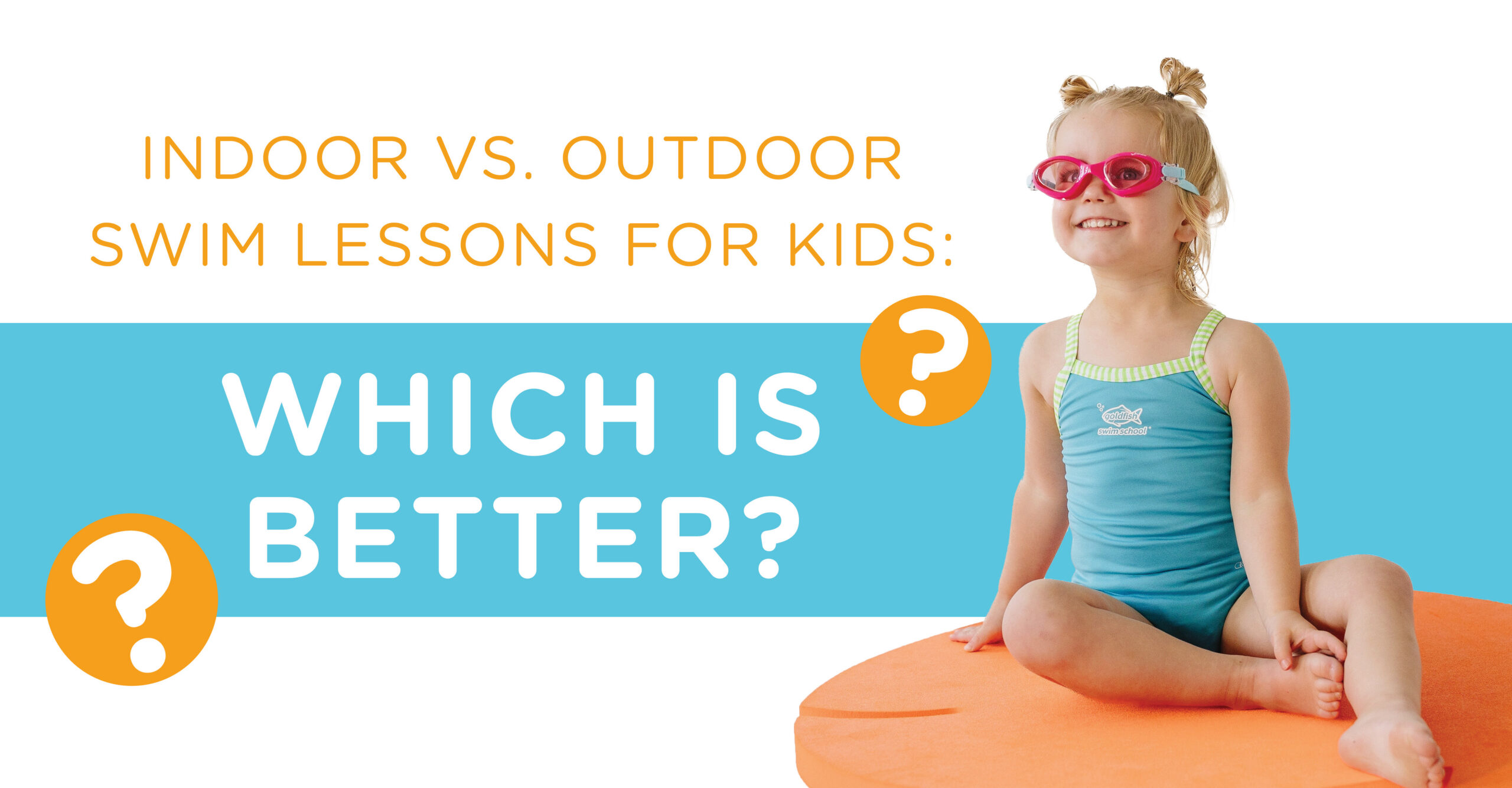
Indoor vs. Outdoor Swim Lessons for Kids: Which Is Better?
Deciding between indoor and outdoor swim lessons is an important choice for many families. While both can help children develop swim skills, indoor swim lessons provide a consistent, climate-controlled environment that supports year-round learning and steady skill development.
What Is the Difference Between Indoor and Outdoor Swim Lessons?
The biggest difference between indoor and outdoor swim lessons is the learning environment. Outdoor lessons take place in open-air pools and may be affected by weather, changing water temperatures, and direct sunlight. Indoor swim lessons are held in heated, climate-controlled pools that provide a warm, consistent environment throughout the year. At Goldfish Swim School, lessons take place in 90° pools designed to help children stay comfortable during class.
Why Indoor Swim Lessons Offer More Consistency
Building confidence in the water requires repetition and steady weekly practice. Unplanned weather cancellations or seasonal shutdowns interrupt a child’s learning momentum, often requiring weeks of review to regain lost ground.
Indoor Pools Provide a More Comfortable Learning Environment
Chilly pool water is one of the quickest ways to discourage a hesitant young swimmer. When kids are shivering, their muscles tense up, making physical technique harder to practice. Warm indoor water temperatures—such as the 90° pools at Goldfish Swim School—help children stay comfortable during class so they can focus on practicing new skills and becoming more familiar with the water.
Fewer Outdoor Distractions Can Support Better Focus
Outdoor swimming environments present constant sensory distractions, ranging from buzzing insects and passing cars to bright overhead sunlight and neighborhood chatter. Indoor swim centers eliminate those external disruptions, making it easier for certified teachers to maintain direct engagement and keep children focused on safety skills.
Indoor Swim Lessons Make Year-Round Progress Easier
Enrolling your child in year-round swimming lessons for kids allows them to continue practicing and developing swim skills throughout the year. Consistent, year-round lessons provide regular opportunities for children to practice and continue developing their swim skills over time.
What Are the Benefits of Outdoor Swimming Lessons?
Outdoor swimming lessons can be a fun option during warmer months, giving children the opportunity to practice swim skills in an open-air environment. They may also help children become more familiar with recreational settings such as backyard pools when paired with direct adult supervision.
What Are the Limitations of Outdoor Swimming Lessons?
Outdoor swimming lessons can be a great option during the warmer months, but there are a few practical considerations to keep in mind:
- Weather: Rain, thunderstorms, wind, or poor air quality may lead to canceled or postponed lessons.
- Water Temperature: Outdoor pool temperatures can change with the weather, which may be less comfortable for younger swimmers.
- Sun Exposure: Outdoor lessons often require sunscreen, sun-protective clothing, and other precautions during warmer months.
- Seasonal Availability: Many outdoor swim programs are only offered during the summer, making year-round instruction and progress more difficult.
Are Indoor Swim Lessons Better for Infants and Beginners?
Many parents wonder whether indoor swim lessons are better for beginners. For infants and new swimmers, a warm, consistent indoor environment can provide a comfortable setting for learning foundational swim skills and becoming more familiar with the water.
Indoor swim programs support swimmers of different ages and experience levels:
- Infant Swimming Lessons: Gentle water acclimation in a warm, supportive setting with parent involvement.
- Preschool Swim Lessons: Essential skill-building focused on independence, breath control, and basic safety habits.
- Intermediate Swim Lessons: Continued skill development, stroke refinement, and coordinated movement in a consistent indoor environment.
- Advanced Swimming Lessons: Precision stroke technique, endurance building, and turns in consistent pool conditions.
What Should Parents Look for in an Indoor Swim School?
Choosing the right facility means looking for key features that elevate the learning experience:
- Warm Water: Look for a swim school that maintains a warm pool temperature. At Goldfish Swim School, our 90° pools help create a comfortable environment for year-round lessons.
- Structured Curriculum: Educational frameworks guided by progression-based learning, such as The Science of SwimPlay®.
- Low Student-to-Teacher Ratios: Small class sizes help provide every child individualized guidance.
- Water Safety: Look for a program that incorporates water safety into regular lessons.
Frequently Asked Questions About Indoor and Outdoor Swim Lessons
Are indoor swim lessons available year-round?
Yes, dedicated indoor swim facilities offer lessons year-round, allowing families to build a consistent weekly routine regardless of the season.
Are indoor pools better for beginner swimmers?
Indoor pools eliminate cold drafts, bright glare, and excessive background noise, creating a calm setting where beginners feel comfortable trying new skills.
Can outdoor swim lessons be canceled because of weather?
Outdoor swim classes may be canceled or postponed due to rain, lightning threats, cold air temperatures, or poor air quality, which disrupts learning schedules.
What temperature is best for kids’ swim lessons?
Water temperatures around 90°F are often more comfortable for young children because they help keep swimmers warm during class.
How often should children attend swim lessons?
Attending swim lessons at least once a week provides the regular practice children need to retain muscle memory, reinforce safety habits, and progress smoothly.
Explore Indoor Swim Lessons at Goldfish Swim School
If you’re comparing indoor vs. outdoor swim lessons for kids, a warm, consistent learning environment can make it easier to maintain year-round practice and steady skill development. Goldfish Swim School offers year-round indoor swim lessons in warm, 90° pools for children of different ages and experience levels.
Find your local Goldfish Swim School to learn more about available classes and enrollment options.
More Posts Like This